
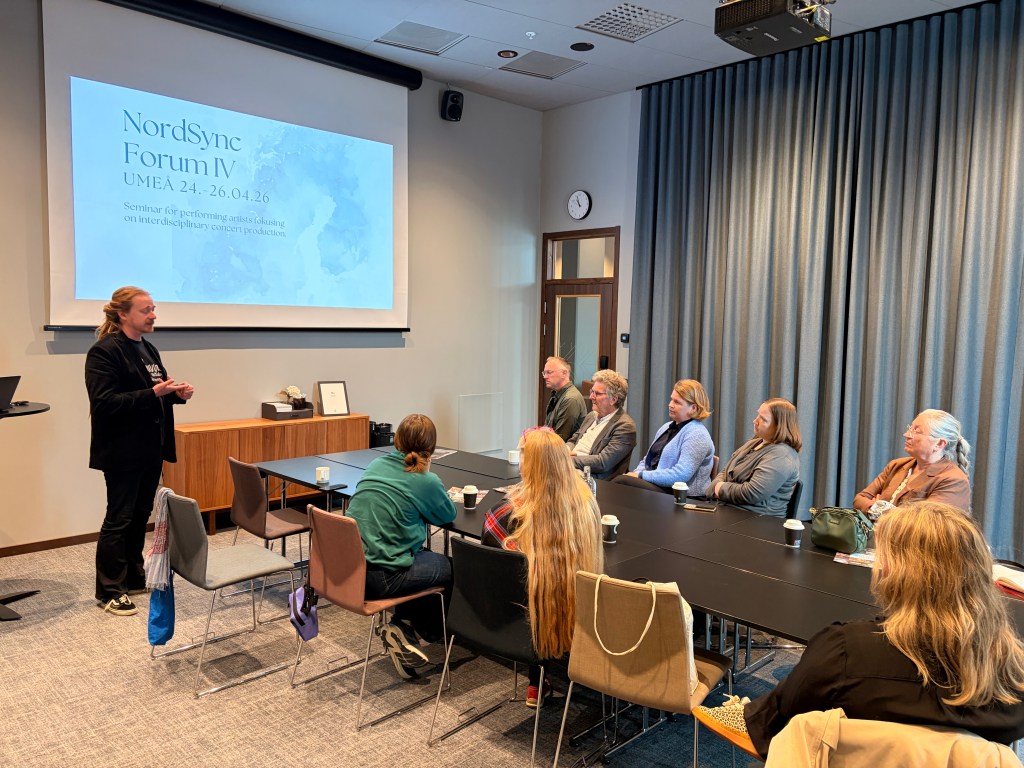
In April 2026, NordSync Project gathered musicians, educators, cultural organisers and representatives of cultural organisations from Norway, Sweden and Finland for NordSync Forum #4 and NordSync Lab #4 in Umeå.
The meeting took place on 23–26 April, with the main Forum and Lab programme on 24–25 April, and was organised in connection with Umeå Musikbranschdagar by ÅC Live. The collaboration gave NordSync an opportunity not only to bring together its own network, but also to connect it directly with a broader ecosystem of artists, organisers, voluntary organisations and cultural-sector actors in northern Sweden.
For NordSync, this was particularly important. One of the central developments in our work during the 2025–2026 season has been the expansion from a network primarily connecting professional performing artists towards closer cooperation with voluntary and non-profit cultural organisations, youth environments and amateur ensembles. This direction had already become an explicit part of NordSync’s annual programme, with the aim of creating stronger connections between professional artistic production, local cultural participation and competence development.
The Umeå meeting gave us an opportunity to test this approach in practice.
The Nordic region as a shared cultural space
The theme of NordSync Forum #4 was:
The Nordic Region as a Shared Cultural Space – developing cross-border and interdisciplinary collaboration along the Blå Vegen.
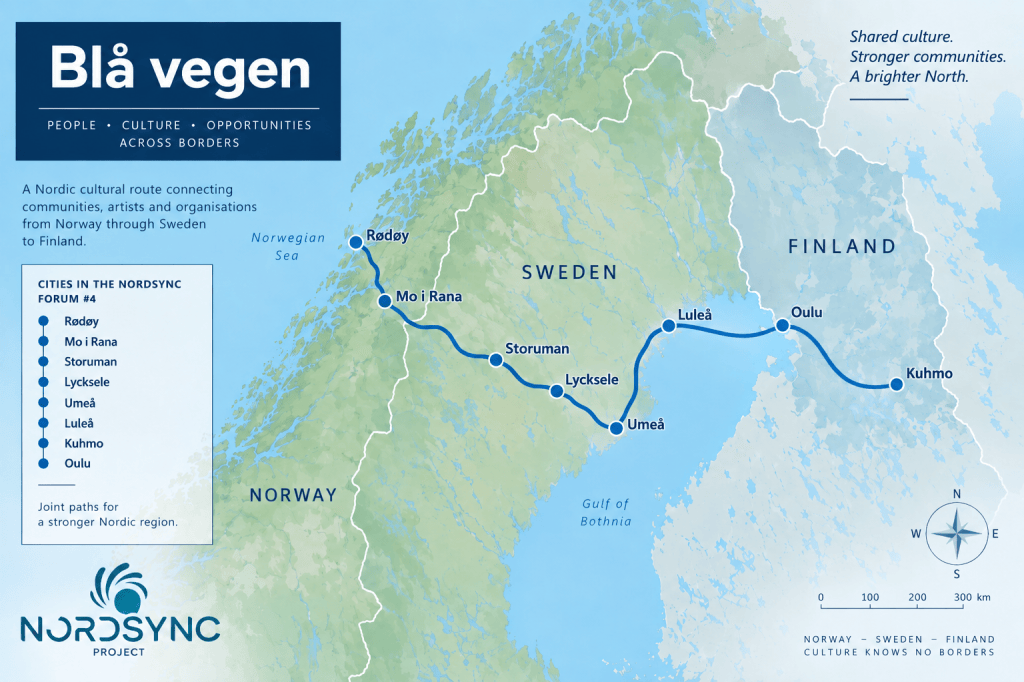
The starting point was the geographical and cultural axis stretching from Northern Norway through Västerbotten and further east towards Finland. We used the Blå Vegen not simply as a road on the map, but as a practical framework for discussing mobility, artistic cooperation and long-term partnerships between cultural environments in Norway, Sweden and Finland.
The discussion was connected to a larger Nordic ambition: how cultural cooperation can contribute to the Nordic region becoming more integrated and sustainable towards 2030. The Forum therefore focused on questions of mobility, knowledge exchange, regional cooperation and new models for developing projects across borders.
Participants represented cultural environments connected to places including Rødøy, Mo i Rana, Umeå, Lycksele, Storuman, Luleå, Kuhmo and Oulu. This geographical spread was important in itself. It allowed us to compare very different local realities while also identifying many shared challenges: long distances, recruitment, access to professional expertise, financing, mobility between regions and the need for sustainable partnerships that can continue beyond individual projects.
From mapping needs to planning projects
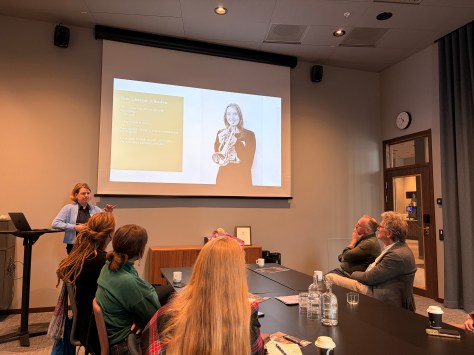
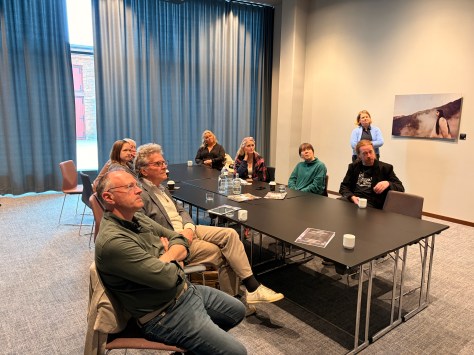
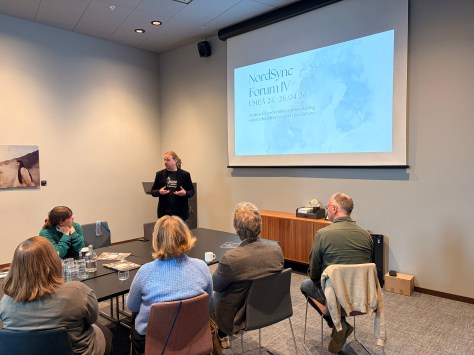
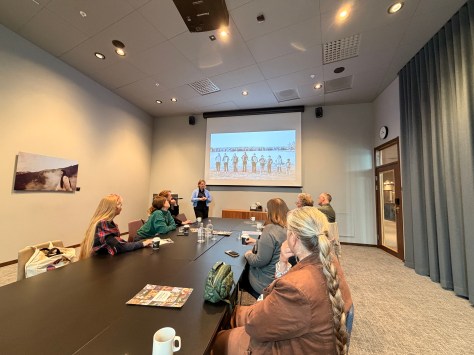
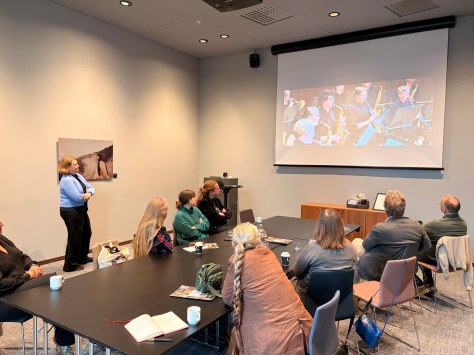
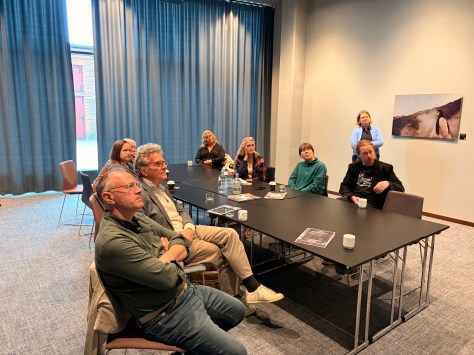
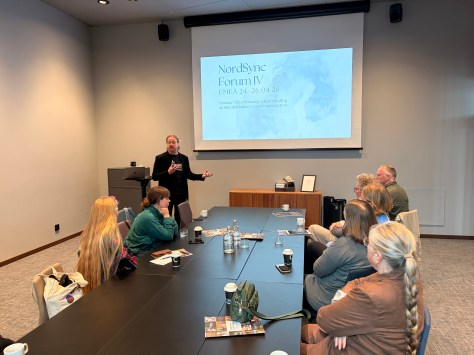
Friday began with introductions and presentations of the participating organisations and ongoing initiatives.
The main cross-border strategy meeting was dedicated to four areas: mapping existing activities and regional needs, discussing mobility and collaboration models, examining possible funding structures, and planning joint activities for the period 2026–2028.
What made the meeting particularly valuable was that it did not remain at the level of general discussion.
Participants were able to compare concrete projects, organisational structures and local resources. The conversations resulted in a number of practical ideas and collaborations that were subsequently developed further during summer 2026 and are continuing into the 2026–2027 season.
Participants were able to compare concrete projects, organisational structures and local resources. The conversations resulted in a number of practical ideas and collaborations that were subsequently developed further during summer 2026 and are continuing into the 2026–2027 season.
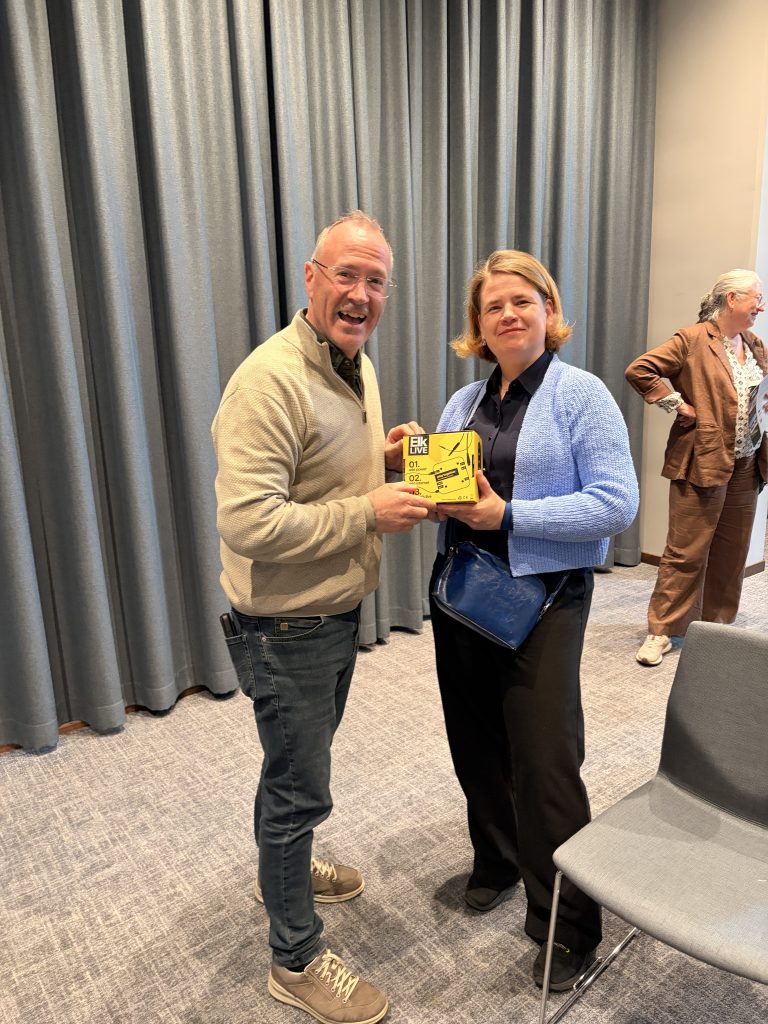
For NordSync, this confirmed an important principle in our work: international cooperation becomes most meaningful when it leads to real activity in local communities.
That can mean an artistic production, a youth project, an exchange between teachers, a new partnership between voluntary organisations or a meeting where institutions that previously worked separately discover that they are facing the same problems and can solve some of them together.
Connecting NordSync with a wider cultural network
A particularly important element of the Umeå Forum was the cooperation with ÅC Live and Umeå Musikbranschdagar.
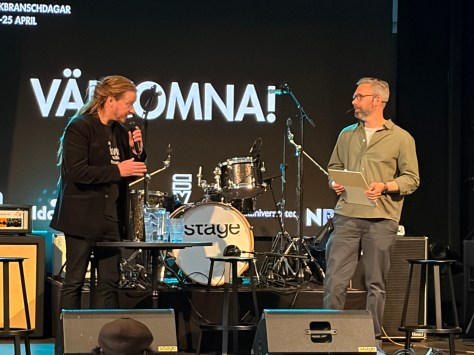
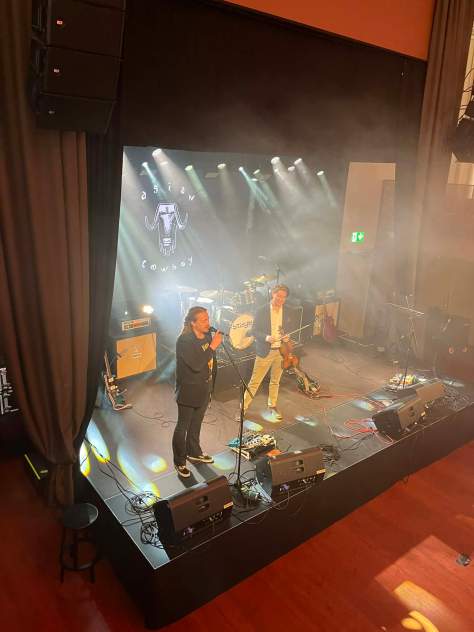
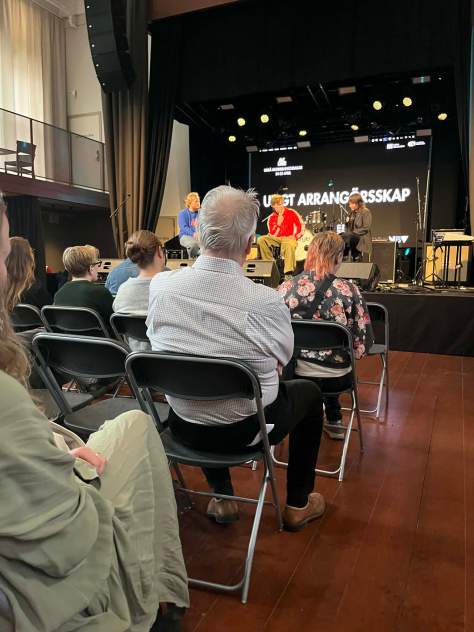
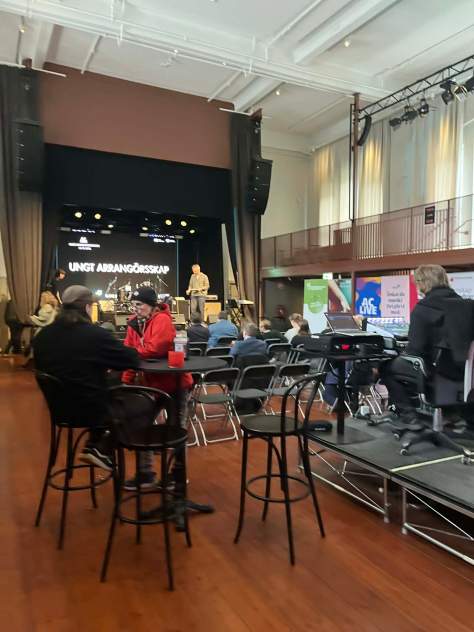
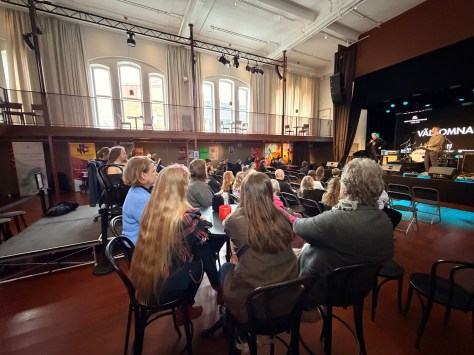
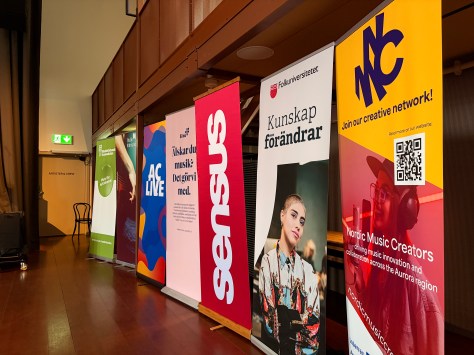
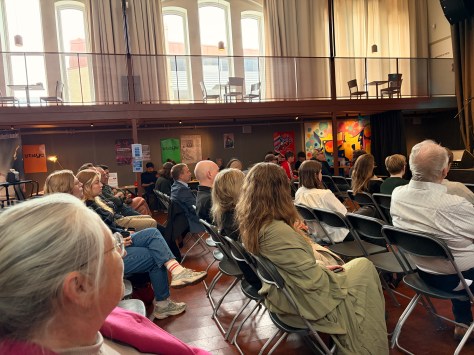
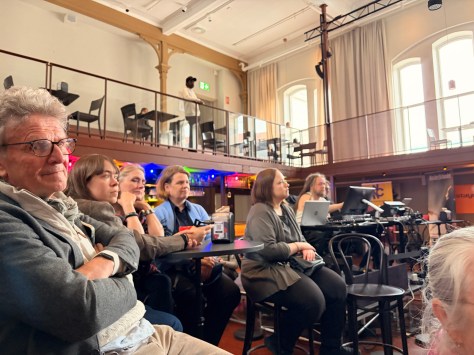
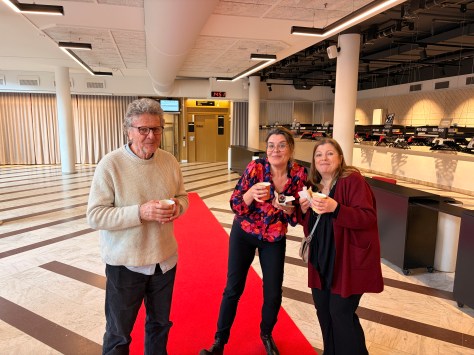
Rather than organising the entire programme as an isolated NordSync event, we deliberately connected parts of our Forum to an already established meeting place for the wider music sector in northern Sweden.
This was an efficient way of expanding our network beyond our traditional field of professional performers.
On Friday afternoon, NordSync participants joined Musikpolitisk eftermiddag, with presentations and discussions concerning cultural policy and the development of the music sector in Västerbotten and other northern regions. The programme created direct dialogue between artists, organisers and representatives of the public sector.
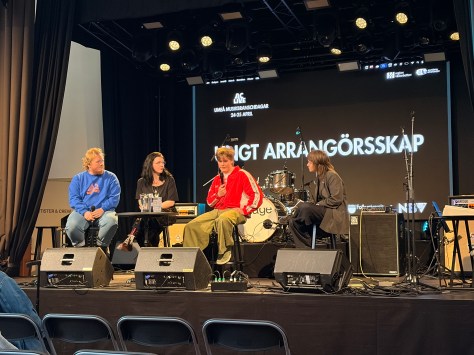
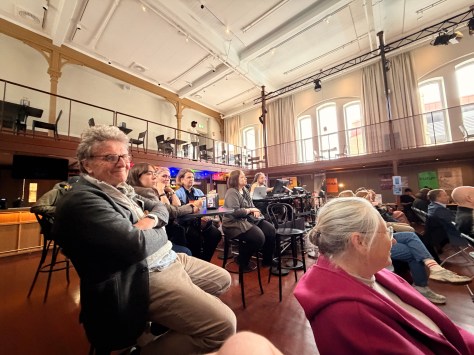
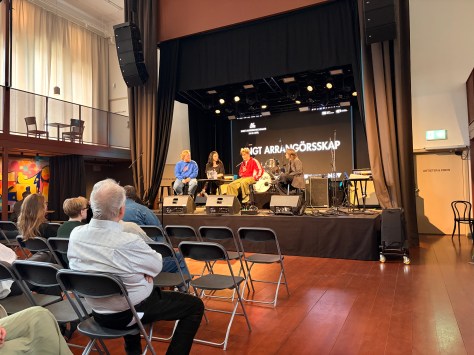
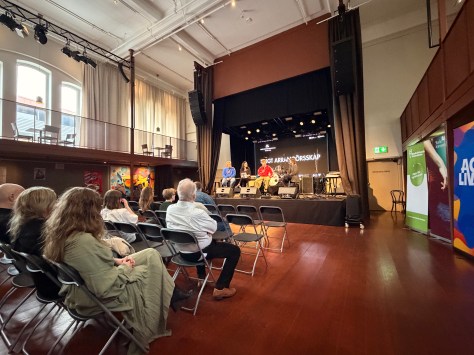
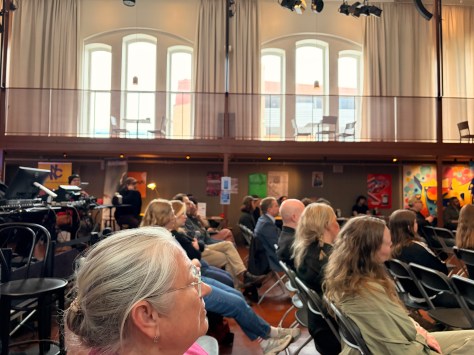
The day continued with industry networking, showcase concerts and informal meetings at Folkets Hus.
For NordSync, these informal parts of the programme were just as valuable as the formal meetings. They created new contacts with organisers, independent cultural actors and organisations working with youth and locally based cultural activity.
By connecting with an existing regional network instead of attempting to build every connection independently, we found a practical model for reaching organisations and cultural environments that are highly relevant to NordSync’s future work.
This experience has become an important reference point for how we want to work in the coming seasons.
Artistic development: 50 years of ideas and practice
Saturday shifted the focus from strategy and networking to artistic practice.
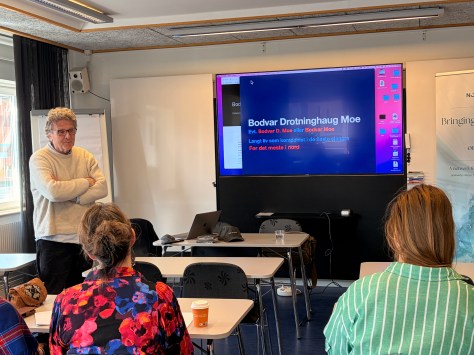
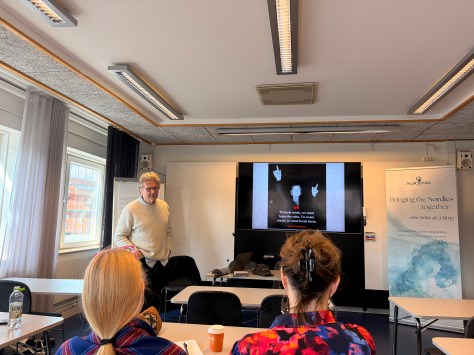
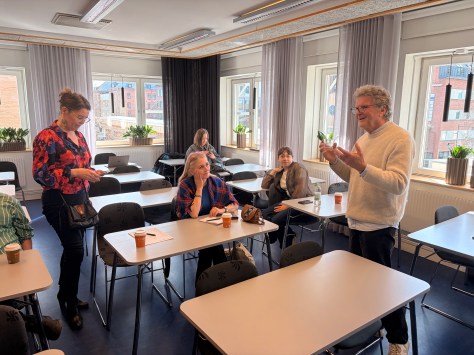
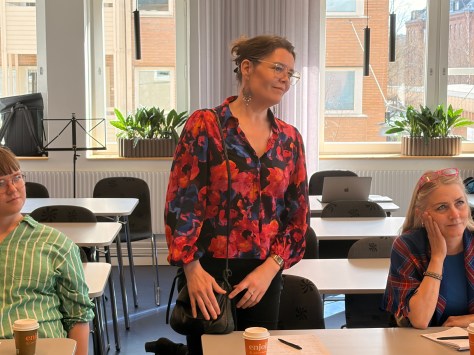
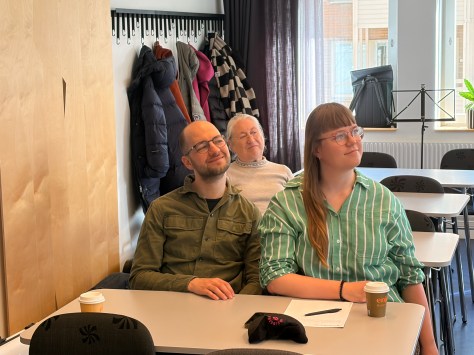
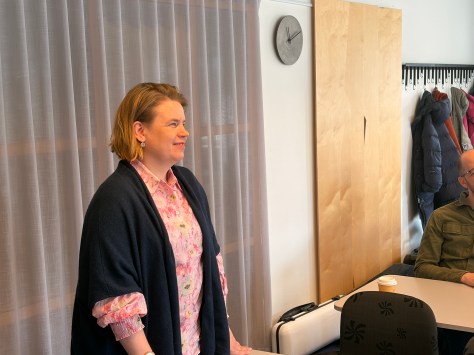
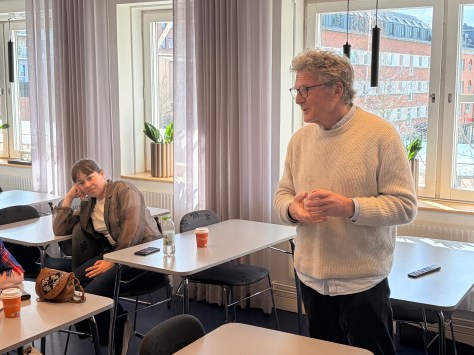
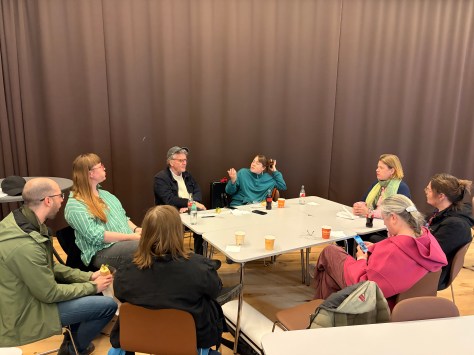
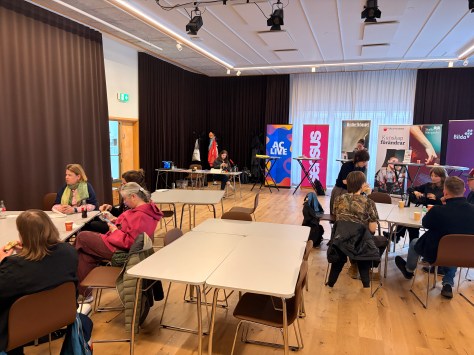
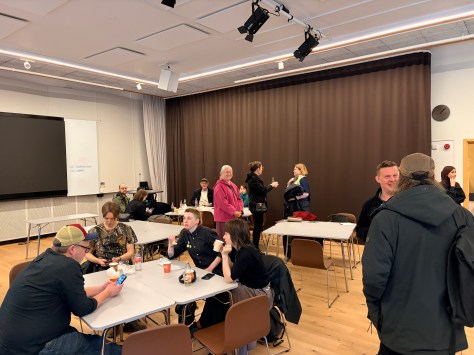
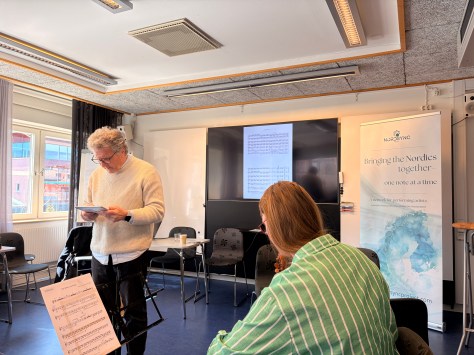
Composer Bodvar Drotninghaug Moe opened the seminar programme with the lecture Att skriva musik över genrer – 50 years of ideas, craft and artistic choices.
The presentation explored artistic work across classical, contemporary and folk traditions, how musical ideas emerge and develop, and how a composer’s working methods change through long-term artistic practice. It was followed by the practical workshop From idea to music – composition and creative practice, where participants explored tools for developing musical material and the balance between intuition and compositional craft.
This combination of reflection and practical work is central to the NordSync format.
Our Forums are not intended only as conferences, and our Labs are not conventional masterclasses. The idea is to connect discussion directly with artistic experimentation and production.
NordSync Lab #4: Nordisk Suite
The centrepiece of NordSync Lab #4 was the first practical work with Nordisk Suite, a new composition by Bodvar Drotninghaug Moe.
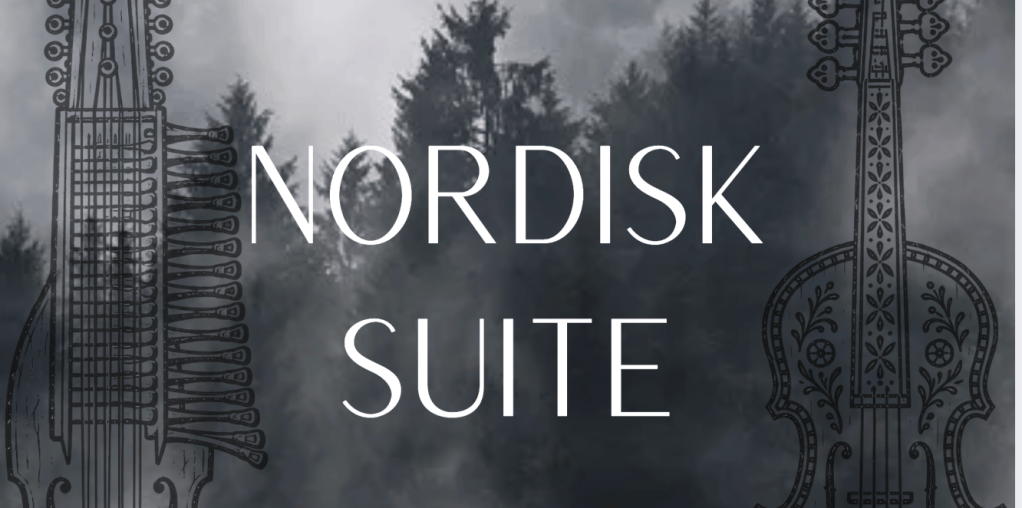
The work represents many of the artistic ideas behind NordSync itself.
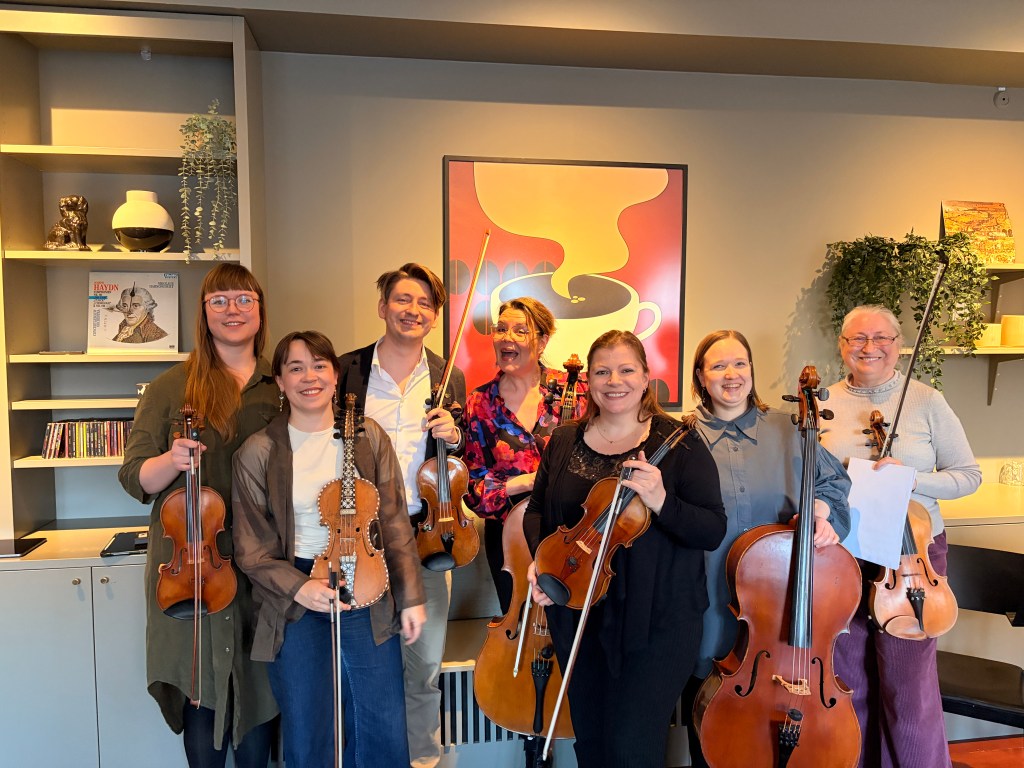
It brings together different musical traditions and approaches: Norwegian and Swedish folk-music influences, two characteristic Nordic folk instruments – hardingfele and nyckelharpa – and the sound world and structure of a classical chamber ensemble.
The Lab was led by Bodvar Drotninghaug Moe together with Sunniva Herland Monstad, Norwegian Hardanger fiddle player, who travelled to Umeå from Vienna to participate in the project.
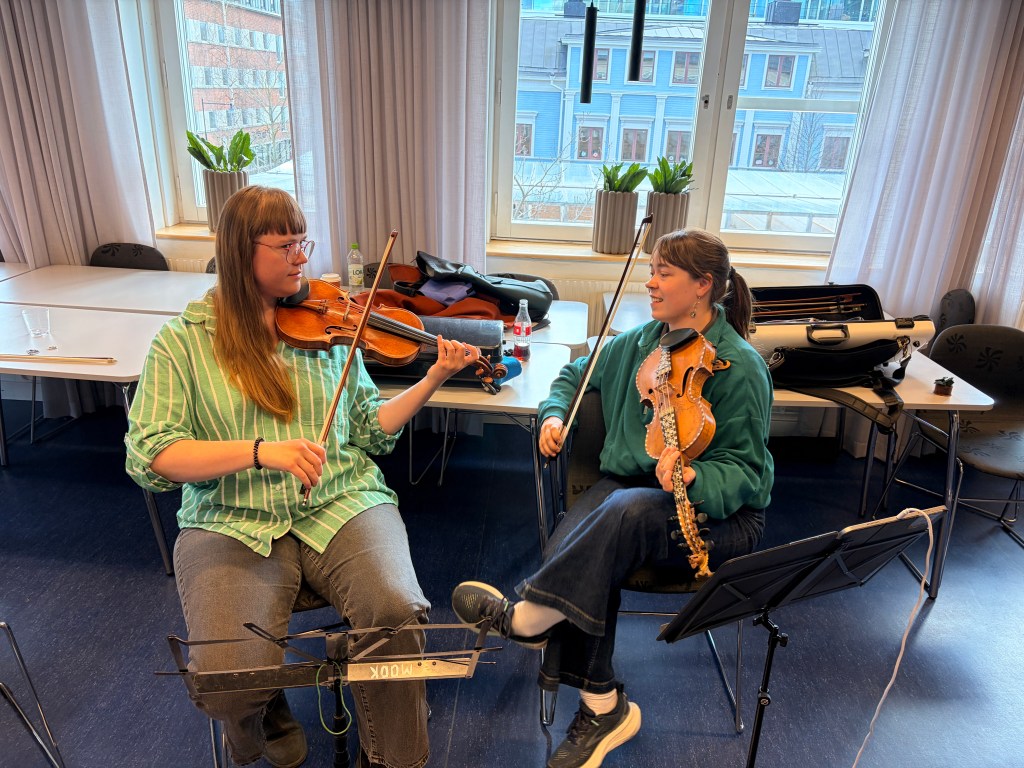
The afternoon session became the first live reading of the newly composed material. Classical string players and folk musicians worked together with the score, experimenting with ensemble balance, interpretation, improvisation and a shared musical language. The original programme described the Lab as practical ensemble work with newly composed material and as an exploration of artistic interaction between classical and folk traditions.
That description became very concrete in the room.
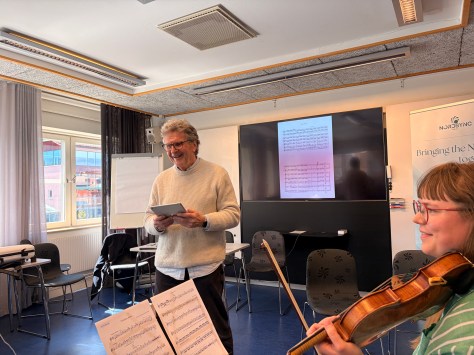
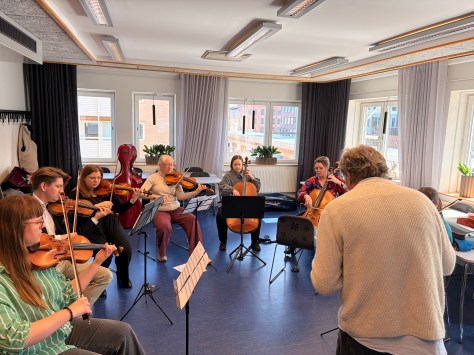
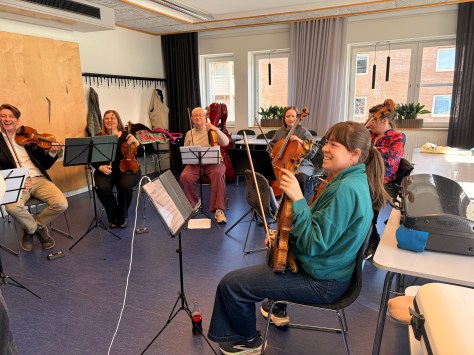
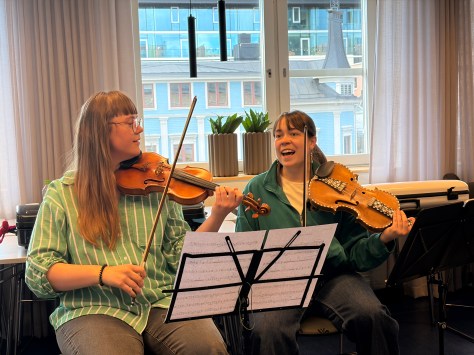
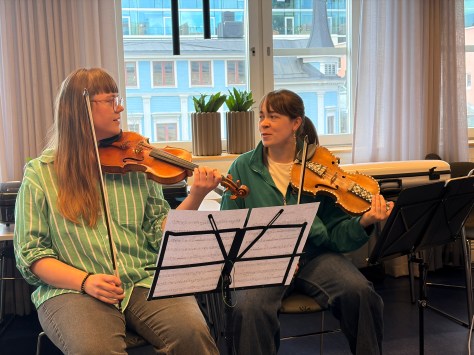
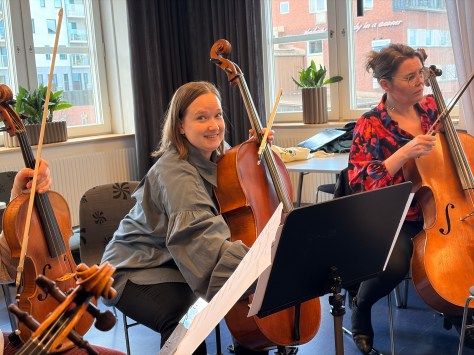
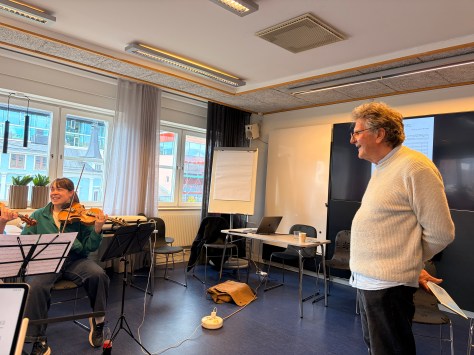
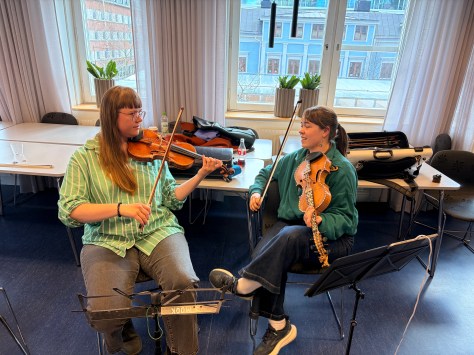
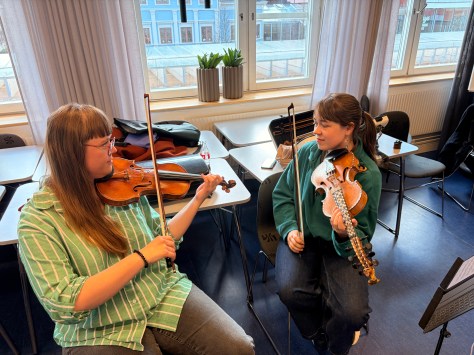
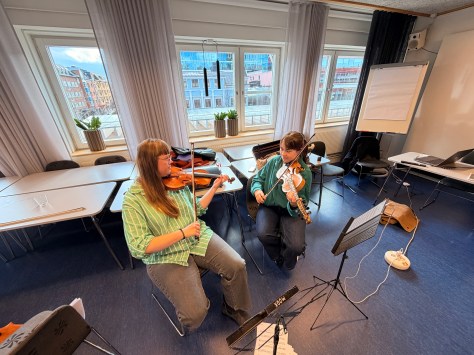
The process was interactive and exploratory, and the musicians’ feedback became part of the further artistic development of the work. Sunniva Herland Monstad’s contribution was particularly important in shaping the relationship between the written material and the performance traditions connected to the Hardanger fiddle.
For us, this is precisely what a NordSync Lab should be: not simply rehearsal of a finished product, but a space where artistic material can develop through direct interaction between composers, performers and different traditions.
Bringing NordSync onto the showcase stage
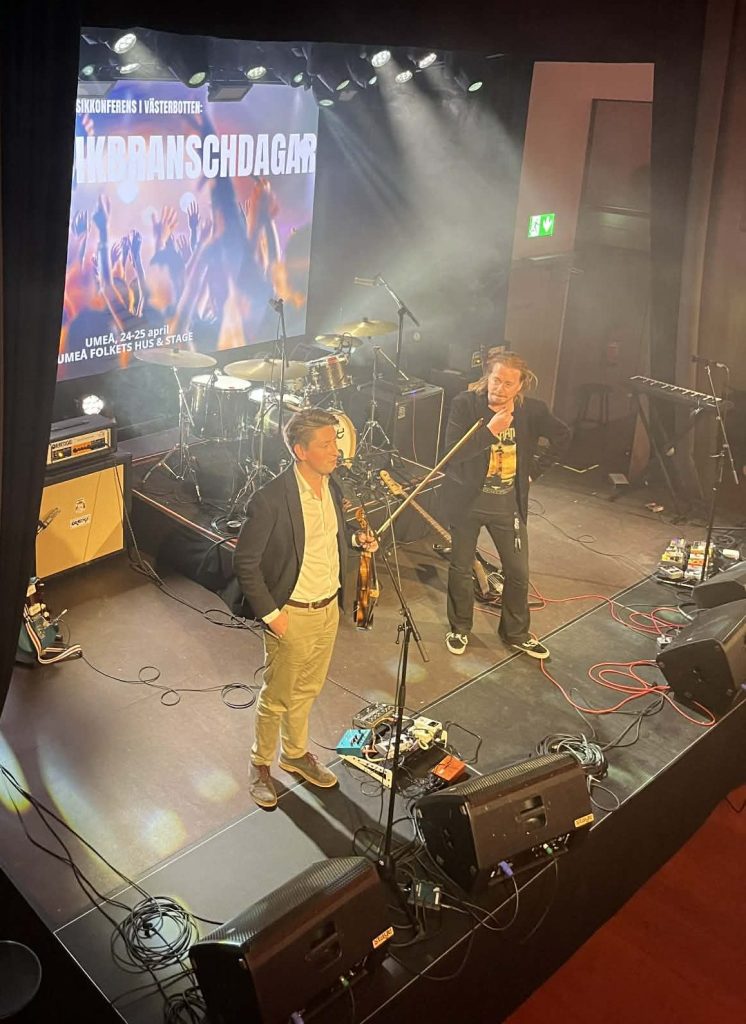
Later that evening, the Lab moved from the rehearsal room to the stage at Folkets Hus.
The NordSync Showcase presented the NordSync Project, the plans for continued cooperation along the Blå Vegen, and Nordisk Suite as a practical example of how our artistic and organisational ideas can meet in one project. The programme included a live work-in-progress excerpt before the evening continued with the wider Umeå Musikbranschdagar showcase programme.
The context was unusual for NordSync.
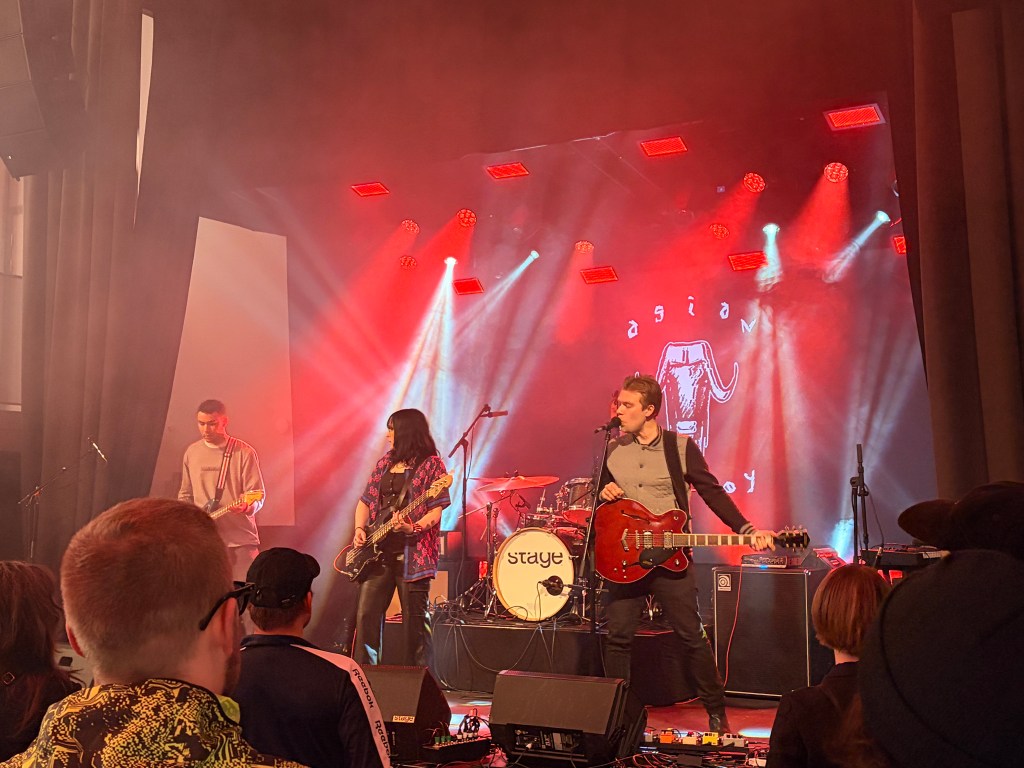
Much of the surrounding showcase programme was oriented towards pop, rock and other contemporary music-industry formats. Presenting a new work combining Hardanger fiddle, Nordic folk traditions and classical chamber music therefore created an interesting contrast.
At the same time, the showcase confirmed something that lies at the heart of NordSync itself: this is exactly where we want to be — in spaces where different musical genres, traditions and professional environments meet.
NordSync was created around the idea that artistic development often happens at the intersection between established fields. Presenting Nordisk Suite in a programme that also included pop, rock and other contemporary expressions therefore felt entirely natural. The contrast did not place NordSync outside its usual context; rather, it demonstrated the value of bringing classical, folk and contemporary music into the same professional meeting place.
The showcase gave us an opportunity to present NordSync as a platform where genres can meet, influence one another and open new possibilities for collaboration. It also created further informal conversations and new contacts during the evening, strengthening precisely the kind of cross-genre exchange that the project is built to encourage.
What did the Umeå Forum achieve?
The strongest result of NordSync Forum #4 was not one individual seminar, concert or meeting. It was the combination of all these elements.
The Forum strengthened our existing cooperation between Norway, Sweden and Finland, while adding new contacts in Västerbotten, Norrbotten and Finland. It gave us a better understanding of the cultural infrastructure along the Blå Vegen and helped identify organisations, projects and individuals with whom future cooperation can be developed.
Equally important, it expanded the type of organisations represented in the NordSync network.
Our work has traditionally centred on professional performing artists and interdisciplinary artistic production. In Umeå, we moved further towards cooperation with voluntary cultural environments, youth organisations, local associations and organisers working outside purely professional structures.
That development is important for several reasons.
Voluntary organisations already possess strong local networks, knowledge of their communities and direct contact with young people and amateur participants. Professional artists, on the other hand, bring artistic competence, production experience and access to wider professional networks.
The Umeå Forum showed that these resources can complement each other.
For NordSync, this is increasingly becoming one of the most promising models for future work: combining professional artistic quality with local participation and long-term capacity building.
From meeting to lasting regional cooperation
An important goal of NordSync has always been that our activities should have effects beyond the individual event.
For this reason, the Forum placed considerable emphasis on developing partnerships and projects that could continue in the following seasons. Sunday’s informal wrap-up conversations were therefore not simply the end of the programme, but an opportunity to confirm intentions, continue discussions and establish next steps.
Several of the ideas developed in Umeå have since moved into concrete planning or implementation for 2026–2027.
The meeting also contributed directly to NordSync’s broader development towards more systematic work with young people, music education and voluntary cultural organisations.
This is closely connected to what we mean when we speak about cultural synchronisation.
The goal is not to make cultural life in Norway, Sweden and Finland identical. It is to make it easier for organisations, artists and young people across the region to know about each other, meet, share competence, initiate projects together and use the cultural resources that already exist on both sides of national borders.
In northern regions, where geographical distances are large and individual cultural environments can be relatively small, this type of horizontal cooperation can make a significant difference.
It strengthens access to competence, creates new opportunities for participation and helps build more resilient cultural communities.
Looking forward
NordSync Forum #4 and NordSync Lab #4 confirmed that the direction we began developing during the 2025–2026 season has substantial potential.
Cross-border cooperation between professional artists remains at the core of NordSync. But our experience in Umeå showed that the network can become considerably stronger when that professional cooperation is connected to youth, voluntary organisations, educators and locally rooted cultural environments.
This approach also corresponds closely with NordSync’s wider objectives for cultural development in the north: knowledge exchange, participation, competence development, sustainable partnerships and people-to-people cooperation across borders. These were central objectives of the 2025–2026 programme supported through the Barents cooperation framework.
The Umeå Forum gave us new contacts, new competence and new working models.
More importantly, it transformed several discussions about future Nordic cooperation into practical relationships and concrete plans.
For NordSync, that is the most important measure of a successful Forum: not only what happens during the meeting, but what becomes possible afterwards.

